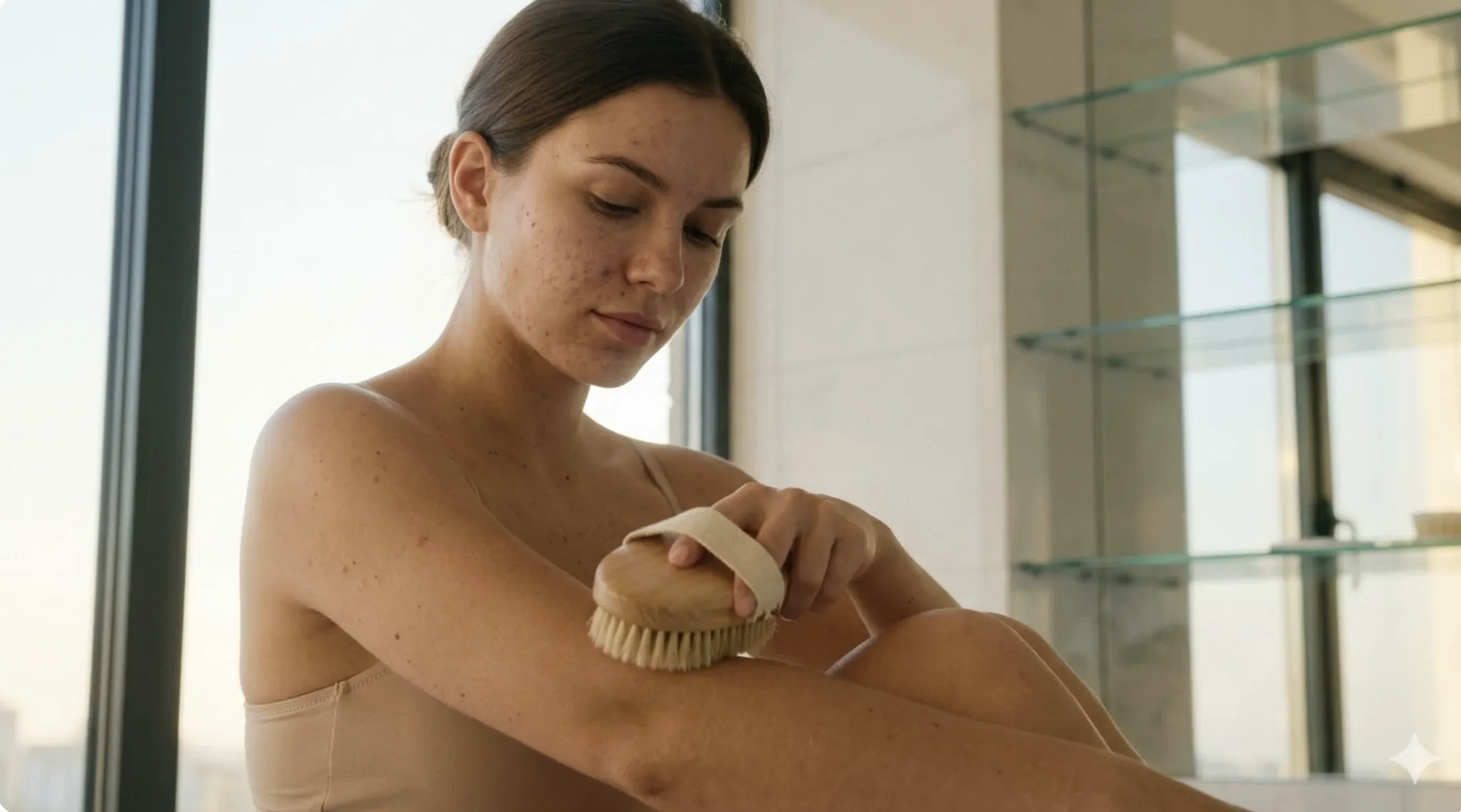
Why Scrubbing With a Loofah is Ruining Your Skin (The Microbiome Secret)
💡 Quick Tip
Babe, if your skin is "squeaky" clean after a shower, you've destroyed your microbiome. Good bacteria are your skin's protective shield against body breakouts and dryness. Throw that loofah away!
Let's talk about a habit you've been doing on autopilot since you were 5 years old: lathering your whole body with a loofah and scrubbing like there is no tomorrow. We've been taught that to be clean and smell good we have to scrub until there are mountains of foam and our skin feels tight. Catastrophic mistake. Let me introduce you to your new best friend: your skin's microbiome. Just as your gut has a bacterial flora that keeps you healthy inside, your skin is covered by an ecosystem of bacteria, fungi, and viruses that work 24/7 to keep your skin soft, hydrated, and free of infections. And every time you use a harsh soap and a scratchy loofah, you are causing an apocalypse in that ecosystem.
The Truth About Shower Loofahs
First, let's talk about that mesh sponge (loofah) hanging in your shower. That innocent object is, literally, paradise for bad bacteria and mold. It's always damp, in a warm environment, and full of dead skin cells. When you scrub yourself with it, you are not getting cleaner; you are spreading rancid bacteria all over your body and creating micro-tears on the surface of your skin. Those micro-tears are the perfect entry point for body acne (yes, the dreaded backne or butt breakouts) and folliculitis. Your best tool for washing your body is your own two hands, clean and soft.

Using your hands with a sulfate-free body wash is enough to cleanse your skin without destroying your bacterial barrier.
The Myth of Soaping Your Entire Body
Unless you work in a coal mine or have rolled in mud, your body does not need soap on every millimeter of skin every single day. Dermatologists are clear: you only need to soap the areas where there is a high concentration of apocrine sweat glands (the "smelly" zones), which means: armpits, groin, buttocks, and feet. The rest of your body (arms, legs, back, and abdomen) is perfectly cleansed by the water and soap that runs down from above. By leaving your microbiome alone in those dry areas, you will notice that your shins stop feeling like sandpaper and you no longer get that horrible itchy leg feeling in winter.
SOS: How to Rescue Your Good Bacteria
If you have spent years abusing body washes with radioactive colors and bubblegum scents (which are full of harsh sulfates like SLS), your skin barrier is screaming for help. The first step is to switch to a "syndet" (a soap-free cleanser) or a pH-balanced shower gel (around 5.5). Furthermore, body skincare is evolving, and you can now find body lotions rich in prebiotics (like inulin or colloidal oatmeal). Prebiotics are basically "food" for your good bacteria to multiply and get strong, taking back control of your skin. Treat your skin like a garden, not a kitchen floor that needs to be disinfected.
💆 Practical Example
Your "Happy Microbiome" Routine
Step 1: Trash the loofah. Seriously, throw it in the garbage today. From now on, you are going to use your clean hands to lather up. If you need exfoliation, use a clean exfoliating mitt once a week, wash it, and dry it outside the shower.
Step 2: Strategic zones. Apply your gentle (sulfate-free) body wash only to your armpits, groin, buttocks, and feet. Massage gently with your hands.
Step 3: Lukewarm rinse. Let the suds run down your legs and arms with the lukewarm water. That soapy water is more than enough to wash away daily dust and light sweat.
Step 4: Food for your bacteria. When you step out, on damp skin, apply a body cream enriched with prebiotics, ceramides, or oat extract to nourish your ecosystem and lock in moisture.